Alternative Matter
’s very own John Toolan was very impressed with the latest album by
Steve Lawson, entitled Believe In Peace. Steve was more than happy to share his insights on the remarkable composing and recording process of his latest project, musical improvisation in general and the use of social media platforms to get his music out to the masses…
What inspired you to record and release this particular piece of improvisation?
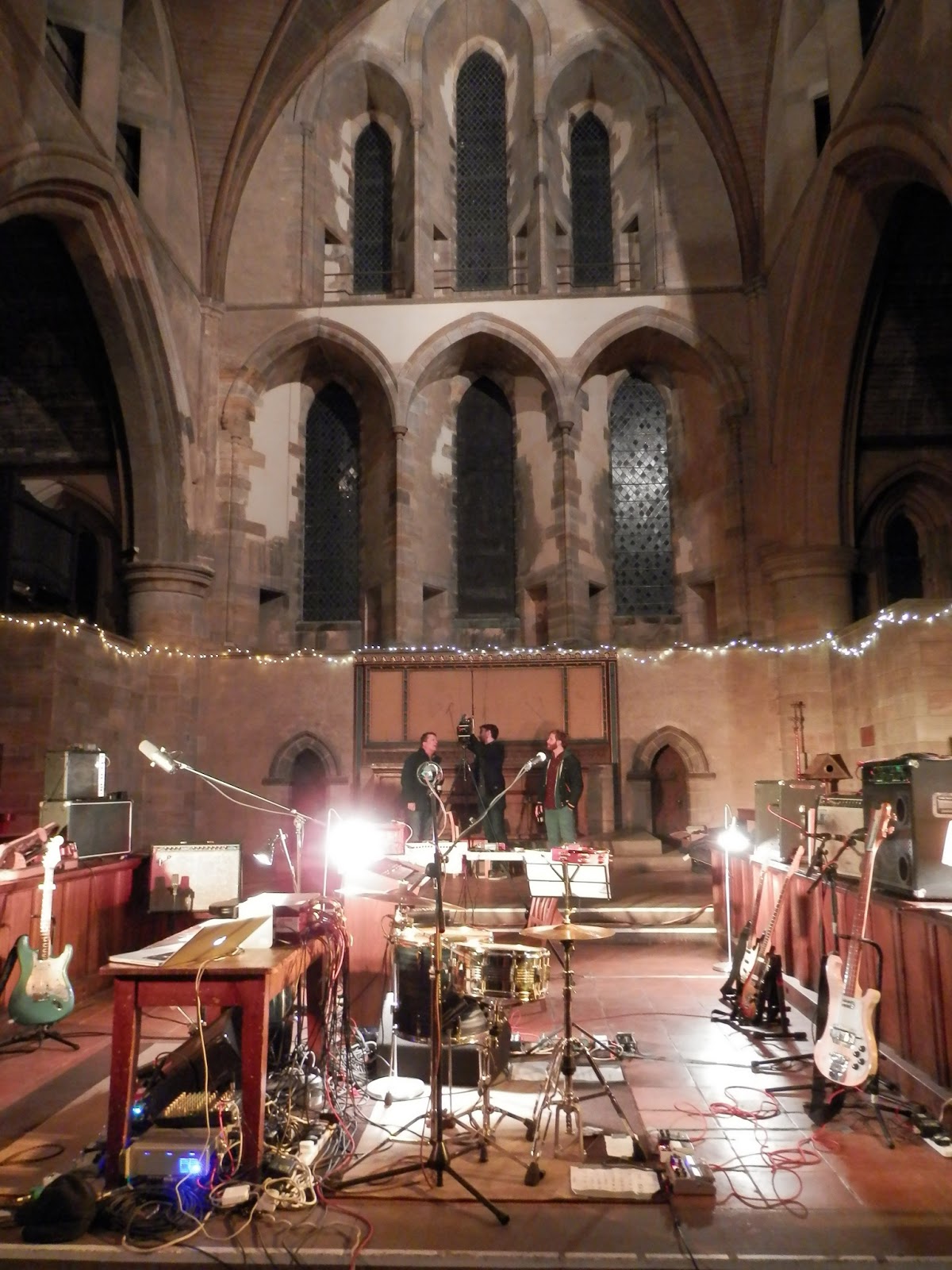
The recording part was easy – as far as possible, I record every gig, and most of my practice sessions. This is possible because my live and studio rigs are identical, so instead of using a mixing desk to pull all the various looped and processed elements together, I use a MOTU soundcard, which I can hook up to my laptop for instant multi-track recording! It’s made for some wonderful live stuff being captured that in any other setting, we’d have been lucky to get a tape from an audience member of.
Deciding to release it was just a matter of it being interesting enough, and feeling like it represented the art well – Geoff Bush has been very supportive of the idea, and was kind enough to invite us to play at his exhibition in the first place. The initial recording had some horrible interference on all the tracks, but computer wizardry being what it is these days, I was able to remove the buzzing sound without affecting and the music at all. It’s remarkable!
In my review of Believe In Peace I cited the work of guitarist Derek Bailey who has written extensively on the art of improvising, how important to a history of music as a craft is improvising to you?
I was really pleased to see the Bailey reference, as his work, and that book in particular were touch stones for me. As an improvising musician from London, the work of that original 60s free improv crowd – which included Derek, and Evan Parker, Gavin Bryars, John Stevens, Kenny Wheeler etc. – and that of their musical descendants, has been huge influence on me. Obviously, I don’t come from the same ‘non-idiomatic’ place when it comes to playing, but that’s partly because I never felt the strangle hold of jazz as something to react against. I also saw improv as being about ‘conversational music’ – saying the best thing that can be said in the moment. In conversation, I don’t feel any need to neologise, or say things that no-one has ever said before. I just want to say the right thing, the most useful and helpful thing I can, the most beautiful thing I can. Same with improvising.
Its place in music, for me is defined by the distinction between ‘right’ and ‘good’. If I’m playing a composition, my first question is ‘is it right?’ – have I correctly rendered the music in the way it was intended, or the way that the bandleader expects me to. Within that is the assumption that it exists because someone else thinks it’s good, but that aesthetic judgement is not necessarily my primary concern.
If, however, I’m improvising, then there’s no such thing as ‘right’. There is only good. I’m asking myself, ‘what’s going on? where are we, and how can I add something to this that will make it fuller or better realised than without me, how can I move this forward (if indeed it needs to move forward)?’ – I’ve often sat silent in improvised music situations for entire sections – 15 or 20 minutes – because what was happening around felt fully realised without my contribution. That’s not really an option if I’m playing in a string quartet, to spontaneously remix Schubert by deciding to mute the cello part for a while and see what happens… I mean, I guess you could, but it’d be a fairly dramatic turn of events in a gig where people have paid to hear the original!
So, that coming together of musicians in a democratic space where the main basis for playing is mutual respect and admiration, and hopefully a very high degree of trust, is a wholly different proposition. Of course, improvised music isn’t always like that, just in the way that performing pre-written music doesn’t always (often?) reach that ecstatic height of realising the artistic vision of the composer in its most transcendent form. But that’s the journey. And that journey is mirrored in the journey of the music itself. In some ways, improvising is a microcosm of a life in music, or a culture’s relationship with music, or indeed that of humanity and music!
In a sense improvisation may be regarded as “impulsive composition”. How true do you think that is?
I think that’s very much true, for me. I know musicians whose main ‘use’ of improvisation is to play LOADS of stuff in the studio and then edit the good stuff from it – to just blow and see what comes out, then cut out the rubbish. I’ve never done that. It’s always felt antithetical to my sense of the journey that’s happening in the moment to play like that. If what I’m playing doesn’t ultimately matter, I can’t feel like it has any value… I have to play as though each thing I’m playing IS that impulsive – or spontaneous – composition, that it has ultimate value, that it is the highest expression of what I’m capable of at that moment.
For me, being a musician is all about making great decisions, and then having the physical control to make the music that those decisions require for their fulfillment. That decision making process is in response to awareness. Awareness and control are the two poles that it all hangs on, whether I’m composing, interpreting or improvising. I still have to make wise decisions and then make a good noise.
How important is the audience reaction, either approval or disapproval, to the process of musical improvisation? Presumably recording improvised music in a studio environment denies the artist that spontaneous feedback?
I do love getting that instant reaction, and I’ve very rarely ever had a ‘bad’ reaction. Perceived indifference is about as bad as it gets – usually if I’m opening for another act and there’s little context for what I’m doing for the audience. But for the most part, I’ve actually got my head down, focused on the things that I need to do to make my music work – my fretless intonation, what’s going on with the various loop stuff, which sounds are on which track in my looper for future processing… The sense of audience appreciation usually comes at the end. But my own assessment of it can sometimes be at odds with the audience’s reaction. I’ve played things I thought were incredible, even when listening back, that the audience didn’t really seem to get, and I’ve had standing ovations for gigs that felt like I was wading through creative treacle… So it varies.
What are the specific challenges for the improvising musician, particularly playing solo bass, who is performing alone without other musicians available to stimulate or influence you?
Ideas. The hardest thing is having the gem of an idea to start with. Most of my practice time is spent building vocabulary – note sequences, chord ideas, phrasing options, sounds – that can be drawn on as a launch point for a particular improvisation. I often build things on very open ideas – pad or chordal parts that have harmonic content that’s not too restrictive in terms of what can happen against it. That means I can then react on an emotional level to how that first idea comes back to me in the room. Does it suggest something dark, something light, something rhythmic, something fluid? All are possibilities… Bass is a wonderful instrument on which to improvise because it has very little in the way of ‘baggage’ – there is no ‘Stairway To Heaven’ of the bass, it doesn’t pull you quite so desperately towards playing whole, conceived pieces. So improv starts from a place of possibility. That feels great.
If I’m playing with someone else, then you basically kick the ball to them when you start and see what they do with it – it’s like a game of consequences, only you can see what the last person wrote. So you add your bit and it goes back and forth, hopefully with a natural flow of attention from one of you to the other…
I must admit to being a lover of improvised music in many forms, but how difficult do you think it is to transfer that spontaneity to a permanent medium such as CD or download?
I don’t see recordings as ‘permanent’ in any sense other than the existential one. They are a memento, a snapshot of the experience of the music happening. Recordings aren’t music, they are recordings of music, so as a musician you let them go and they take on their own life. They get played through endless stereos of varying quality, in different environments with different background noises and distractions, so every experience of that recording is different. Meanwhile, I’m onto another thing, and more music is being created and recorded and those are being allowed to set forth into the world… I see recordings as narrative entities – they are part of my story, but they have their own story, and other people will use them for their own story telling quite apart from their origins. That’s a wonderful experience.
In the arena of purely improvised music, who would you recommend as a starting point for the listener who may be reluctant or apprehensive to investigate?
There are a few that I have found particularly inspirational over the years – there are three guitarists that have informed by aesthetic quite extensively – Bill Frisell, David Torn and Nels Cline – all of whom switch very freely between composed elements and freely improvised music. David Torn describes his improvisational approach as ‘pan-idiomatic’ which is one I’ve claimed too.
Beyond that, I’m a fan of Keith Jarrett’s improvised music, both the solo piano stuff and the trio with Gary Peacock and Jack DeJohnette. And finally King Crimson – I love the risks the various members of Crimson take with improv. If you listen to THRaKaTTaK – the album of improvisations that the double trio version of the band put out, there’s a lot of stuff on there that is the sound of them finding where to go next. That’s fascinating. It’s gritty and real and honest, and I like that a lot.
Using spaces to perform music in that are not traditionally regarded as concert spaces, such as art galleries or house concerts, has long fascinated me, how important are these spaces to you as a performer?
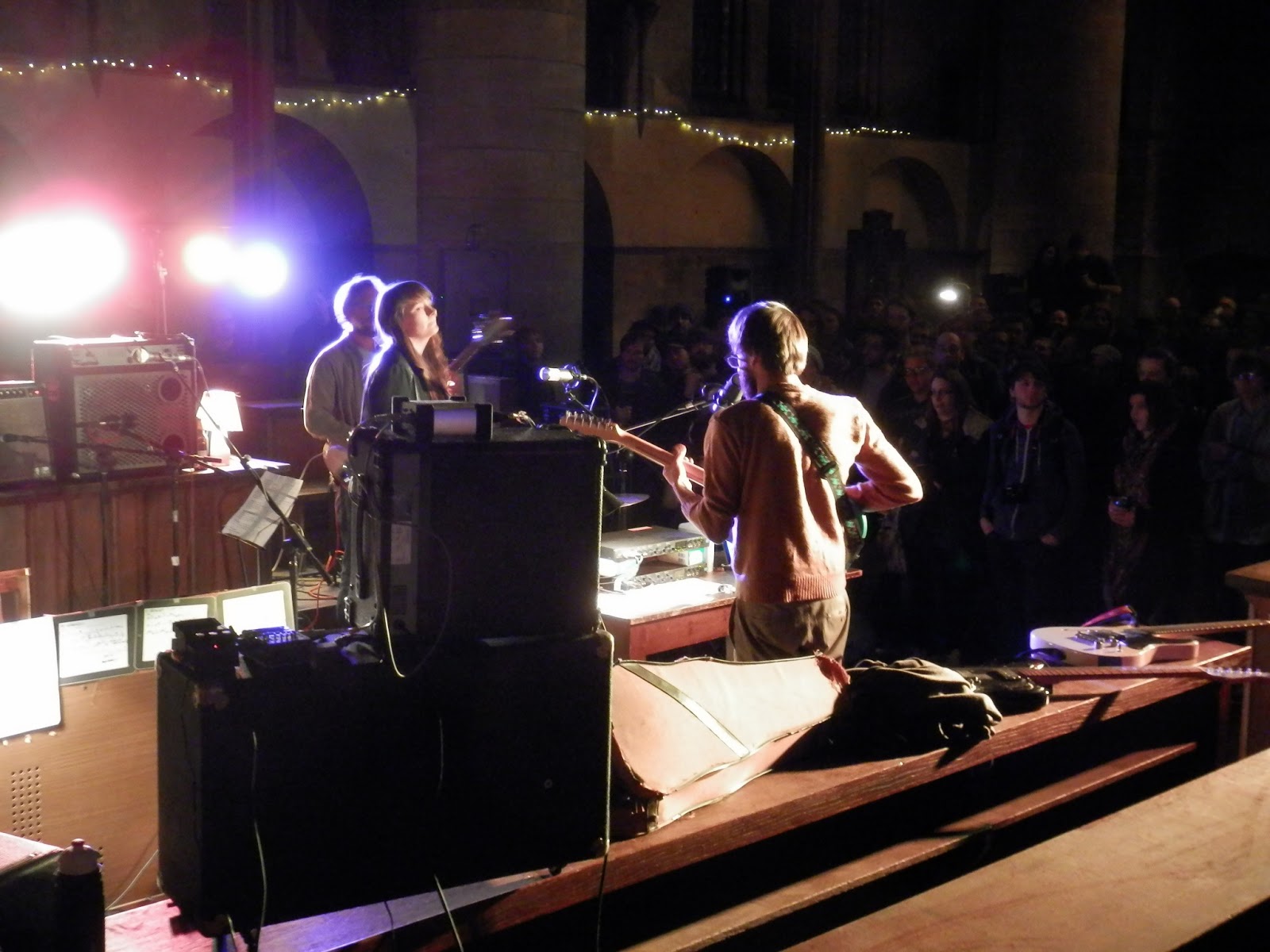
Hugely important! It wasn’t until Lobelia and I started playing almost exclusively house concerts that I realised just how toxic so many environments where music gets played are to both its performance and enjoyment. The sense that you as a performer are there primarily to get people to buy beer can stifle creativity a lot. A house concert is all about music, but it’s music stripped off the bullshit of fame and celebrity. No-one who thinks of themselves as a celeb is going to play a house concert to 20 people, unless they’re charging 5 grand a ticket and only playing to their equally wealthy friends. House concerts are a great leveler. You’re there to play music, but we all come together around that shared desire for the music to be made a priority, for the experience of it to be something of value, rather than something that provides a way to make money out of something else. I love that.
Making your music available on such user friendly and flexible sites such as Bandcamp appears to be such an efficient means now to build an audience for your music. How important are these sites to your model of how the music industry has developed over the past 3 to 5 years?
They are of such importance that the terminology of ‘the music industry’ is pretty much redundant right now. We have a music economy that is ‘post-industrial’ – or perhaps even pre-industrial. For me it’s no longer about the manufacture of ‘stuff’ but about an ongoing experiment in making music that I feel is meaningful available to people who share that sense, and then between us finding a way to make it possible to allow more of it to exist, and more like minded people to find it. The transactions are built on the listeners gratitude for the existence of the music and the story that it is the consequence of.
So there’s a financial component to that, but the notion of sustainability is no longer just about making a wage, or market share, or whatever. It’s relational, it considers artistic freedom and integrity as a factor, and it also invites in those who would otherwise be excluded due to the higher financial barrier to entry. When you’re confronted with a ‘pay what you think it’s worth’ proposition, you have to make a decision. Do I take this seriously or not? I’m sure there are some people who lazily see that and go ‘great, free shit!’, but my guess is they are in the minority. By and large, the people who download my music for free do so as an act of discovery, or because they genuinely can’t afford to pay for it, or because they are in a part of the world where none of the only payment options are available to them. Those are all wonderful and worthwhile reasons for getting free music, and I’m glad to be able to make that possible.
The flip side is that a high percentage of my listeners pay more for the music that they would on iTunes or Amazon, or even on CD at a show, because they are serious about wanting to be a tangible part of the ongoing financial viability of making music. If they pay for it, I can spend more time making it. It’s a pretty healthy relationship.
As an artist trying to get people to pay attention to your music, how important do you think social networking sites such as Twitter and Facebook are now?
Twitter changed so many things for me – Facebook I largely tolerate, but Twitter feels like the thing the internet was invented for – open, friendly, inquisitive conversations happening across the globe with the option to share loads of great things. Sure, people use it to be horrible to each other, to spread lies and to talk about the x-factor too, but it’s so easy to avoid those conversations and not give them the oxygen of attention.
I spend about 9/10ths of my ‘music-talk’ time online pointing my Twitter friends to other people’s music. I’m responsible for far more sales of other people’s music than I am of my own – that stands to reason, I’m a solo bassist and that’s a fairly niche pursuit. But I’m also a solo bassist with a large percentage of non-bass playing listeners, and that’s mostly down to social networks, and a discovery mechanism that isn’t based on searching for keywords. It’s based on interestingness. So instead of trying to think of superlatives to describe what I do in adverts, I just write about things I find interesting, share the good stuff I’ve found elsewhere, and invite others in to be part of that conversation. The soundtrack to all of that is, of course, my own music so there tends to be a point where the people I’m talking to on Twitter will go ‘I wonder what this dude actually sounds like’, mostly with a wildly inaccurate set of assumptions about what a solo bassist will sound like! And then some of them go ‘that’s nice, but not my thing’, some actively dislike it, but still like me, and others think it’s the greatest thing they’ve ever heard. I’m happy with all those three outcomes!
Time for the final question. What specifically inspired you to donate the money raised from the online album sales to the human rights charity Reprieve?
The title of Geoff’s art show was ‘Believe In Peace’ – the onus being on peace as something worth believing in. Not an extant reality that we just assume exists, but as part of a vision of the future that we commit to. So I thought I wanted to do something practical, tangible, towards that end, and I’ve been a supporter of Reprieve for a long time. Their work pursuing legal justice for people whose human rights have been taken from them is deeply inspiring. They campaign on behalf of the remaining detainees at Guantanamo and against the inhuman horror of the death penalty. They’re great people, and I’m happy to be able to do something that raises money for – and awareness of – their vital work.
http://alternativematter.net/interviews/interview-with-steve-lawson