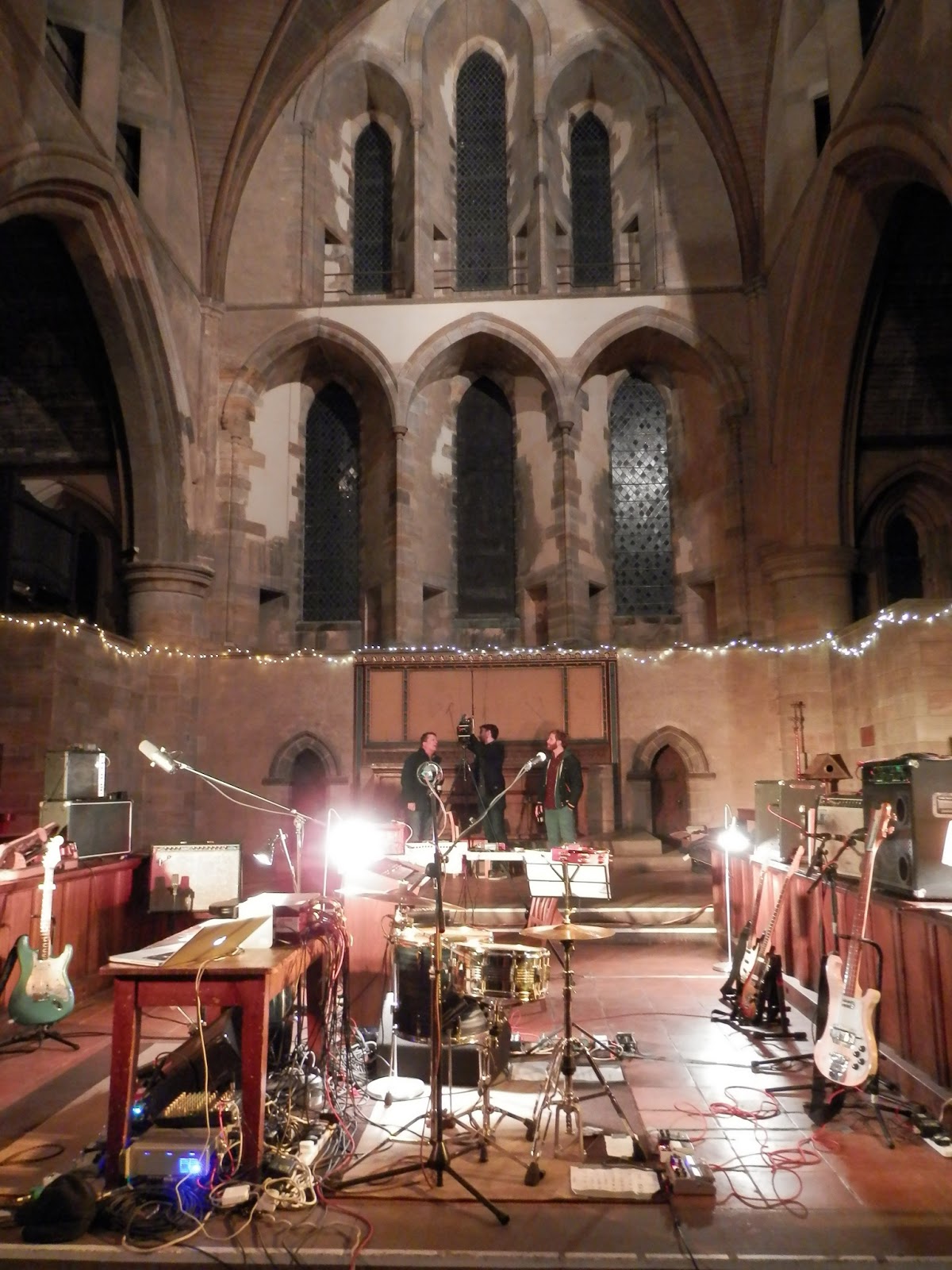
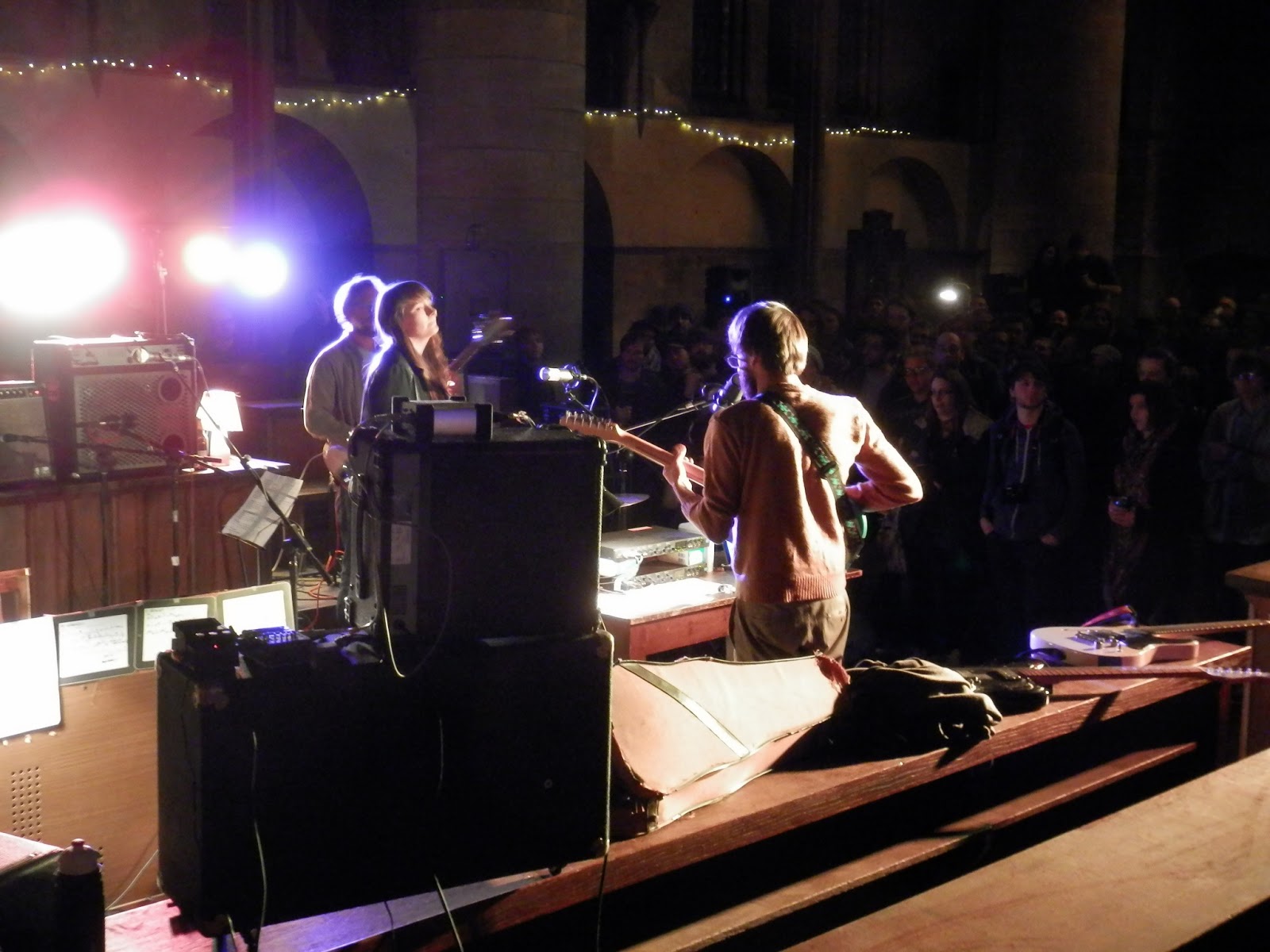
After experiencing their intense live show last year and being blown away by their first full length album “Commuters” earlier this year, ThisIsNotAScene‘s John Toolan had a few questions to put to Coilguns. Jona and Louis took time out of their busy touring schedule to answer them as fully as they could. They talked about the album, recording ‘live’, tour funding and much, much more…
What is the premise behind the tracks (and album in general) “Commuters”?
LOUIS: This record addresses ourselves as commuters; active people constantly travelling from a point A to another one called B. Somehow we, touring musicians, do the same. Point A being here the club we leave in the morning and B the one we discover at the end of the day. It may be a different club, city, country, it’s still a club. Just like these commuters, we’re part of a tribe of nomads, an informal population of rootless monkeys. And yes, we’re proud of our job.
What we usually forget is how static we actually are. We all end up spending most of our time in traffic jams, highways, petrol stations, motels, backstages. This is our C point, the one that’s not our destination but the whole way leading to it. C is the no man’s land.
Ever had the impression that your train is not really moving, but that it is the landscape itself that is moving instead? Well, touring is static. Our house is our bus and you are our visitors, not the contrary. Distances don’t get smaller, they just don’t exist for us. We make friends, they come to our show (they even bring a bottle or two) we entertain them, and they get back to their normal life. Nothing changes for us, we’re still on the road.
I made a few references to late 60′s architecture utopias. First of all because it is trendy and fun, but also because they crystallised the condition of the commuters. Plug-in Cities, No-stop Cities, Continuous Monument. This is how it feels touring the world nowadays, rock ‘n’ roll clubs are a continuum of standard equipment. Wherever we go, we’ll be sure to find what we need to survive and communicate. We’re the new nomads, and our life isn’t that far from what these architects predicted. Our tour van is our private life cell, e-mail English is our Esperanto, the world wide web is our monument.
The artwork makes it obvious : circular shapes, standard subway map colours, ocean tides, didn’t we realize the earth was round staring at the sea horizon ?
I wrote a first text named Minkowski Manhattan Distance and took it as a basis for these songs. I picked a sentence or two per track and paraphrased it into a new proper song. They all share the same theme: distance versus time, urban spaces, human relationships and so on. The usual blah blah. At the same time, these are just songs, you know, raw punk poetry to scream along heavy riffs and frantic drumbeats, there’s not so much space for clever thoughts. Don’t freak out too much if it seems absurd; it is probably meant this way.
What music has helped to inform the sound of Coilguns over the years?
JONA: At The drive-in, Botch, Breach, Deftones, Converge, Dillinger Escape Plan, Don Caballero… For some of these bands we are talking about the riffing, for some others about the production, the way they record their album (or recorded) and the way they play their instrument. Listen to any Breach record and you’ll understand what I’m talking about.
The Coilguns sound is incredibly complex yet abrasive and, particularly when experienced live, almost feral in nature. How does a typical Coilguns piece come about?
JONA: I usually come up with a couple of riffs, a draft of a structure. I record them, send them to Luc and after a week we meet in the room and start working on it. Then we go with the flow. Luc’s really involved in the song writing at this point. He’s a good guitar player and he gives me his opinion from a drummer point of view and since I don’t know how to count he often straightened my fucked up riffs and makes them more efficient. The very first riff of the very first song ever recorded for this band (Mastoid) was Luc’s riff. We spend a lot of time both seated in the living room with 2 guitars gathering ideas on how to improve the songs.
A good example would be “Commuters Part 2”. At first I had written this song that had this kind of “At The Drive-In” vibe to the main riff (that you can actually hear on Commuters Part 1) and the rest of the song was quiet melodic. It was pretty short with a proper A, B, A, B, C, B kind of structure…But eventually, Luc decided that it was too gay and that we should focus on these 3 chords that were a simple transition. We started jamming them out, looping different guitar lines and these 3 chords ended up being 11 minutes of an unbearable build up.
So we discuss everything and we also record pre-productions. Then we listen to them and meet the next day and share our feelings about them. When we’re happy we just send it over to Louis (who never ever rehearse with us) and he lays down his vocals. Sometimes he asks us to make one part longer or shorter but usually he’s fine with whatever we do.
With the release of the full length “Commuters” do you feel the sound of the band has developed in any way?
JONA: It surely did. All the obvious influences have been well digested I think. They’re still there, but much more diluted, it’s more subtle. Then we naturally went through this unconscious process of pointing at what made us sound like any other band and what sounded like us. We then focused on the latest option and after 3 ep’s, we can say that we wrote the album that will serve as a solid base for what this band will be in the next couple of years. This apply to the song writing as well as the production. We’re just at the beginning of where we wanna lead this band to but I really think that there is a strong identity in “COMMUTERS” and the way we’ve defined COILGUNS with this album leaves us a lot of room to experiment BUT still sound like COILGUNS you know what I mean?
What is the premise behind the tracks (and album in general) “Commuters”?
LOUIS: This record addresses ourselves as commuters; active people constantly travelling from a point A to another one called B. Somehow we, touring musicians, do the same. Point A being here the club we leave in the morning and B the one we discover at the end of the day. It may be a different club, city, country, it’s still a club. Just like these commuters, we’re part of a tribe of nomads, an informal population of rootless monkeys. And yes, we’re proud of our job.
What we usually forget is how static we actually are. We all end up spending most of our time in traffic jams, highways, petrol stations, motels, backstages. This is our C point, the one that’s not our destination but the whole way leading to it. C is the no man’s land.
Ever had the impression that your train is not really moving, but that it is the landscape itself that is moving instead? Well, touring is static. Our house is our bus and you are our visitors, not the contrary. Distances don’t get smaller, they just don’t exist for us. We make friends, they come to our show (they even bring a bottle or two) we entertain them, and they get back to their normal life. Nothing changes for us, we’re still on the road.
I made a few references to late 60′s architecture utopias. First of all because it is trendy and fun, but also because they crystallised the condition of the commuters. Plug-in Cities, No-stop Cities, Continuous Monument. This is how it feels touring the world nowadays, rock ‘n’ roll clubs are a continuum of standard equipment. Wherever we go, we’ll be sure to find what we need to survive and communicate. We’re the new nomads, and our life isn’t that far from what these architects predicted. Our tour van is our private life cell, e-mail English is our Esperanto, the world wide web is our monument.
The artwork makes it obvious : circular shapes, standard subway map colours, ocean tides, didn’t we realize the earth was round staring at the sea horizon ?
I wrote a first text named Minkowski Manhattan Distance and took it as a basis for these songs. I picked a sentence or two per track and paraphrased it into a new proper song. They all share the same theme: distance versus time, urban spaces, human relationships and so on. The usual blah blah. At the same time, these are just songs, you know, raw punk poetry to scream along heavy riffs and frantic drumbeats, there’s not so much space for clever thoughts. Don’t freak out too much if it seems absurd; it is probably meant this way.
What music has helped to inform the sound of Coilguns over the years?
JONA: At The drive-in, Botch, Breach, Deftones, Converge, Dillinger Escape Plan, Don Caballero… For some of these bands we are talking about the riffing, for some others about the production, the way they record their album (or recorded) and the way they play their instrument. Listen to any Breach record and you’ll understand what I’m talking about.
The Coilguns sound is incredibly complex yet abrasive and, particularly when experienced live, almost feral in nature. How does a typical Coilguns piece come about?
JONA: I usually come up with a couple of riffs, a draft of a structure. I record them, send them to Luc and after a week we meet in the room and start working on it. Then we go with the flow. Luc’s really involved in the song writing at this point. He’s a good guitar player and he gives me his opinion from a drummer point of view and since I don’t know how to count he often straightened my fucked up riffs and makes them more efficient. The very first riff of the very first song ever recorded for this band (Mastoid) was Luc’s riff. We spend a lot of time both seated in the living room with 2 guitars gathering ideas on how to improve the songs.
A good example would be “Commuters Part 2”. At first I had written this song that had this kind of “At The Drive-In” vibe to the main riff (that you can actually hear on Commuters Part 1) and the rest of the song was quiet melodic. It was pretty short with a proper A, B, A, B, C, B kind of structure…But eventually, Luc decided that it was too gay and that we should focus on these 3 chords that were a simple transition. We started jamming them out, looping different guitar lines and these 3 chords ended up being 11 minutes of an unbearable build up.
So we discuss everything and we also record pre-productions. Then we listen to them and meet the next day and share our feelings about them. When we’re happy we just send it over to Louis (who never ever rehearse with us) and he lays down his vocals. Sometimes he asks us to make one part longer or shorter but usually he’s fine with whatever we do.
With the release of the full length “Commuters” do you feel the sound of the band has developed in any way?
JONA: It surely did. All the obvious influences have been well digested I think. They’re still there, but much more diluted, it’s more subtle. Then we naturally went through this unconscious process of pointing at what made us sound like any other band and what sounded like us. We then focused on the latest option and after 3 ep’s, we can say that we wrote the album that will serve as a solid base for what this band will be in the next couple of years. This apply to the song writing as well as the production. We’re just at the beginning of where we wanna lead this band to but I really think that there is a strong identity in “COMMUTERS” and the way we’ve defined COILGUNS with this album leaves us a lot of room to experiment BUT still sound like COILGUNS you know what I mean?