Friday, 17 May 2013

Matt Berry and the Maypoles – Brudenell Social Club, Leeds 16th May 2013


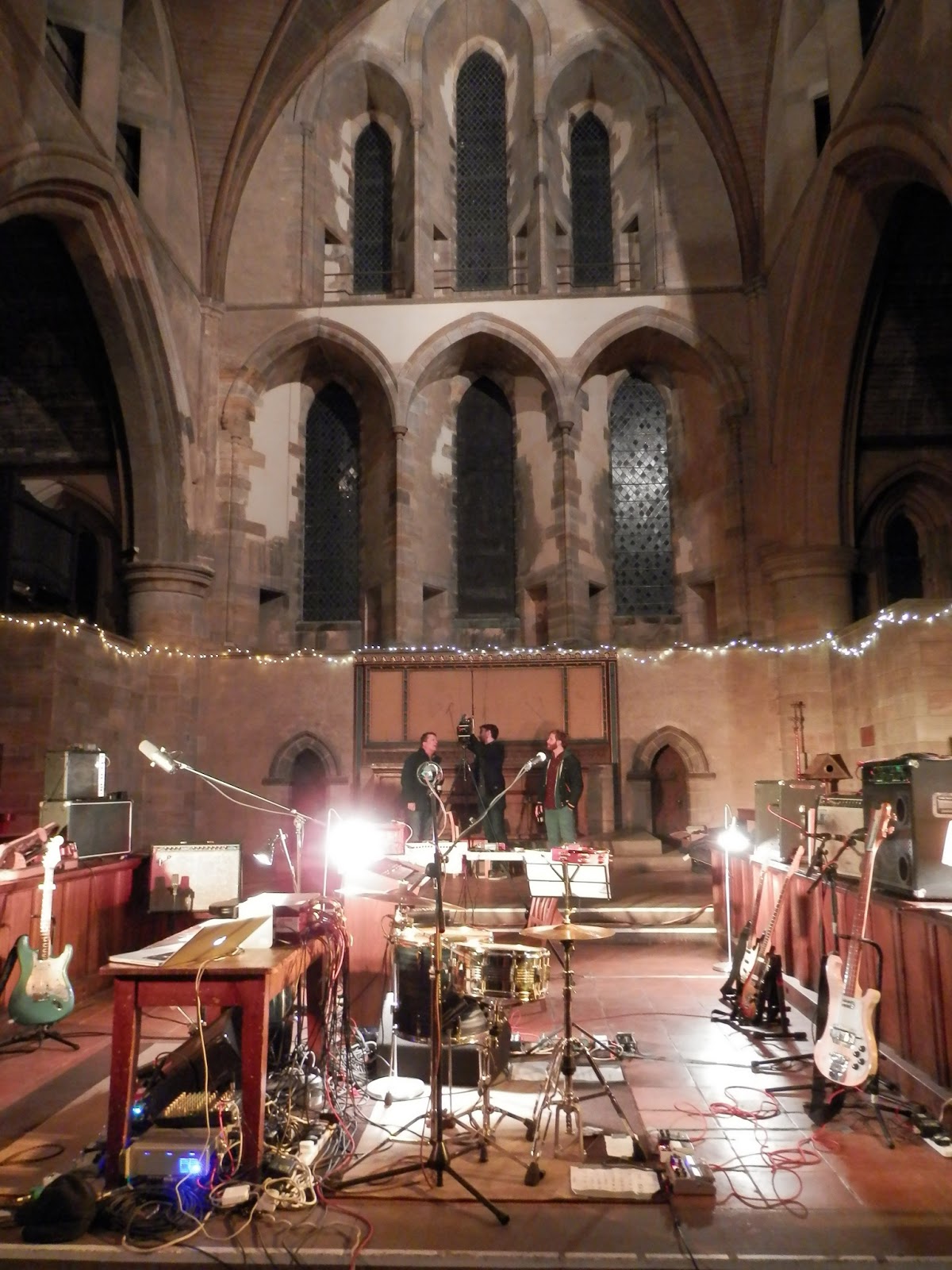
The Brudenell Social Club in the heart of Headingley is gradually filling with a variety of customers of varying age groups. The merchandise stall is causing interest due to an array of rustic looking tour t-shirts, as is the bar, with drink prices far and away reduced from city centre prices. Pugwash released their debut album “Almond Tea” in 1999 and since then have been releasing cleverly crafted pop tunes with a twist, but not an unpleasant twist. There were obviously members of the audience this evening who were familiar with their work and who were able to give impetus for those of us who were new to the band. Displaying a fine array of Rickenbacker guitars, the tunes were coming thick and fast and the momentum was maintained through a tightly performed set. Song titles such as “It’s Nice to Be Nice” and “Be My Friend Awhile” give the listener some idea how uplifting these tunes could be, and indeed they were, but not to the extent that they were saccharine sweet. Think Electric Light Orchestra meet the High Llamas. There was a palpable air that the musicians on stage were having a magnificent time playing these songs, and the between song banter belied characters that were familiar with stage work and knew how to engage with their audience. Apparently Brian Wilson of the Beach Boys showed a fleeting interest in their material, and it is not hard to understand why.


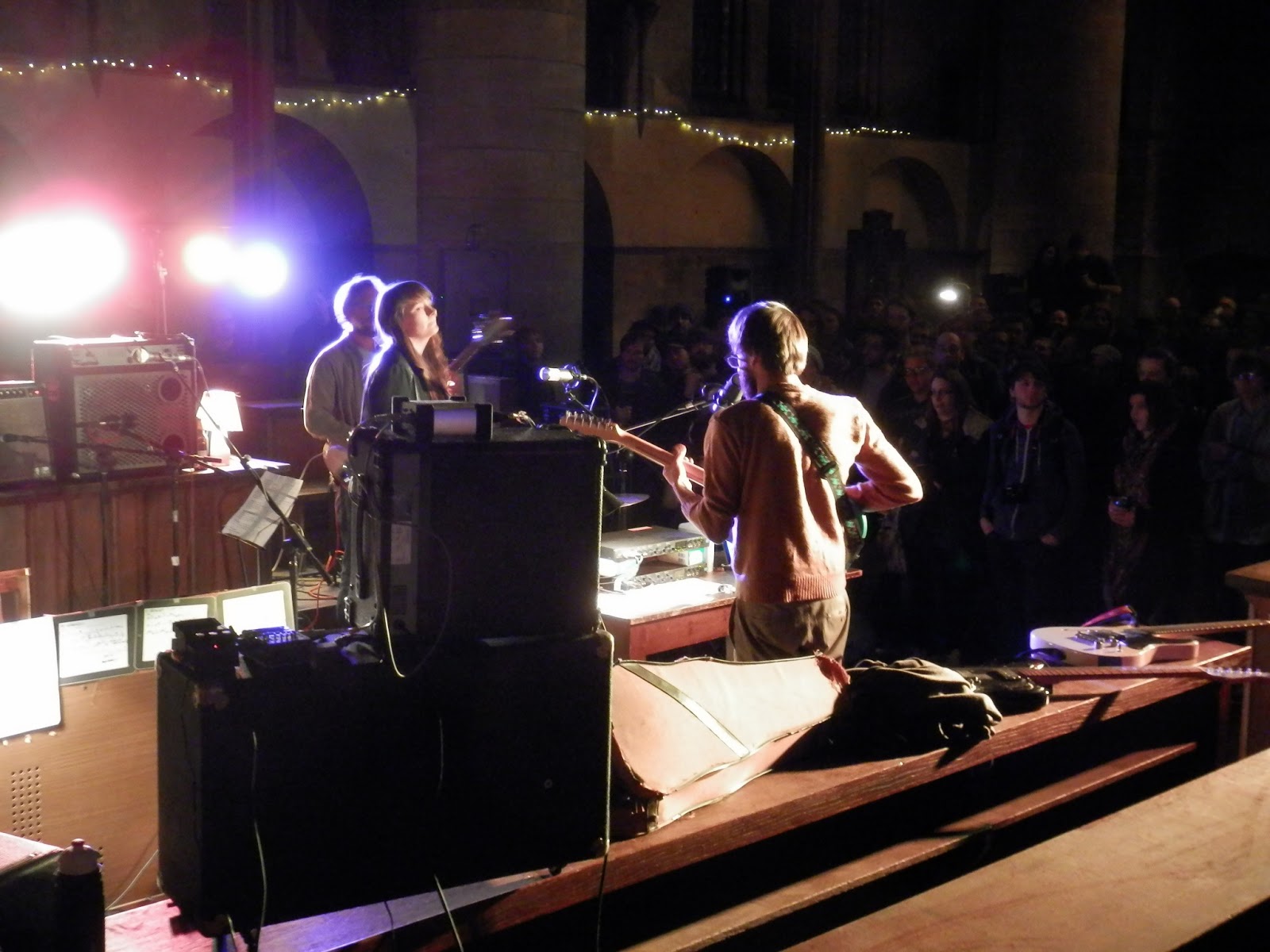
Three members of Pugwash feature on the new release by Matt Berry, “Kill the Wolf”. Matt Berry the comedy writer/actor and Matt Berry the singer/songwriter/multi-instrumentalist are two diverse characters with a personality that spans the two. Comparisons between his two persona are inevitably to be made and, it could be argued, one informs the other.  Renowned for his contributions to such cult television series as “The IT Crowd”, “The Mighty Boosh”, “Snuffbox” and “Garth Marenghi’s Dark Place” as well as composing music for “Saxondale”, Matt Berry has obviously gained the respect and affection of the audience tonight, as the club was full, and busy with anticipation.  Opening with “Medicine” tracks from his new release were showcased as well as precious moments from his back catalogue, including "A Song for Rosie" from his last album "Witchazel" . Possibly one of his most well known pieces "Theme from Snuff Box”, which curiously appears in the film “Dredd”, was given a slightly more relaxed rendition in stark contrast to the material from the new album. These latest arrangements have an edge which appears to give them more credibility in the psychedelic folk and progressive rock arena. There is still a soulful funky framework to these tunes, but the edges have been roughened, and the chord progressions perverted. Some of the lengthier workouts, such as the nine minute “Solstice”, displayed muscle and bite, whilst some of the more delicate tunes show what a gifted and talented multi-instrumentalist he is. Berry himself describes the new album as, “another pastoral folk journey, but this time with a slightly more sinister edge”, a description which suitably evokes their character.  


For audience members of a certain age, and proclivity, the highlight of the evening must have been the bands rendition of the theme tunes to the television series “Are You Being Served?” and “Sorry”. Whilst just as the smiles of recognition were drifting from the faces of the audience, the encore featured members of Pugwash joining the band for a heart warming and joyous version of Wings Bond theme “Live and Let Die”. Berry appeared comfortable on stage and directed the bad with a professional confidence that makes the audience feel at ease. Half way through the set one audience member shouted “Faaaaaaatheeeeeeer”, a quote from a classic “IT Crowd” scene featuring Berry, which, although doubtless shouted at concerts on numerous occasions,  reinforced the reverential position he occupies amongst his admirers. 


Sunday, 12 May 2013

Steve Lawson & Daniel Berkman - Finger Painting review

Steve Lawson & Daniel Berkman - Finger Painting


Steve Lawson has a habit of recording ever note he plays, which has been shown in the past to archive some fascinating improvisations, both alone and with other like minded performers. Ever one for challenging projects, solo bass player Lawson has collaborated on “Finger Painting” with Daniel Berkmanwho is here featured playing electronic percussion, ukulele, Gravikord (a 24 string, electric, double bridged harp) and synthesisers, from sessions orchestrated by San Franciscan singer Artemis, who can herself be heard on these recordings.
To provide some background, Lawson has played 10 improvised shows withBerkman which have been recorded and are to be released as a 10 album, 11 hour download, USB stick or “best of” 2 CD set. One show has already been released as “Accidentally (On Purpose)” in January 2013. This particular set features pieces differing greatly in mood and texture. “Antidote to Everything” has a wraithlike feel which gathers momentum from gently dripping bass lines to roasting shards of looped and treated distortion. The percussion, always lying enigmatically under the surface, is the vehicle over which the whole improvisation rides. “Towards the Sun” opens with dolorous tones shifting steadily over otherworldly soundscapes. Gently picked phrases break the layers of sound, creating music that would not be out of place in a cathedral setting....
Steve Lawson & Daniel Berkman – Finger Painting

Monday, 8 April 2013

Ashley Reaks - Power Failure album review

ashley reaks - power failure


Context is everything. According to his biography Ashley Reaks abandoned academia at an all boys public school after hearing the Ramones “Rocket to Russia” album and seeing Gee Vaucher’s artwork for Crass. After failing his art exam by tracing the cover of the first Ruts album, he embarked on a number of disparate projects including making music, collages and Dadaist poetry. Claims to fame include playing bass on “Take That’s” Mark Owen’s solo album and forming electro-pop outfit Younger Younger 28, who, within 6 months of forming, were playing the main stage at Glastonbury. Spending 2000 to 2009 on a variety of exhibitions, art and poetry tours; including stage appearances in a sheep’s mask making moaning noises, and producing a number of album releases from this tapestry of experiences, including experimental music and spoken word “Melancholia” in 2008.
Now 2012/2013 sees Ashley Reaks release a number of divergent albums including the one under consideration here “Power Failure”. The cover artwork itself displays his obvious love of collage, and reflects perfectly the variety of influences apparent on the music within. ‘From Egg to Worm to Fly’ has a striking refrain which skims briskly over a majestic bass line that any fan of Jah Wobble or Bill Laswell would be delighted to hear.
A lifetime’s interest in poetry is evident on ‘Lucky Gordon’ which, whilst having a naive, child like quality, is brought to maturity by authoritative bass and brass. Then we see the collage effect as ‘No Wonder Camels Spit’ changes the mood to one of introspection through repetitive piano phrases and delicate vernacular that are at times evocative of a possible movie soundtrack by Philip Glass and other minimalist composers. By gradually building layers of texture the piece gathers momentum, whilst still retaining an elusive enigma.
Raising the mood slightly ‘Bulldog Grace’ skips gracefully, whilst ‘Karma Bonfire’ grabs the listener by the lapels with stark, pragmatic poetry, read by Joe Hakim over a disquieting mixture of bass, brass and eastern influenced instrumentation. Here we now see the true spirit of the album, where the aesthetic finds its true voice. ‘Miss Holy Holy’ is electro a capella with a sting in the tail, whilst ‘The Glance of Mercy’ is a further nod to experimental, minimalist music but augmented now with bold percussion and brass lines.
‘Jesus in a Manger’ illustrates entirely the influence of Crass and Gee Vaucher, with its confused, feverish spoken word introduction and unsettling soundtrack. Careful listening reveals the spectrum of influences already acknowledged, from dub, improvisational and experimental jazz through to ambient washes of sound. The barbed vocals become breathless and urgent before fading unsympathetically....


Monday, 1 April 2013

Jello Biafra and the Guantanamo School of Medicine - White People and the Damage Done review

Jello Biafra and the Guantanamo School of Medicine - White People and the Damage Done


It is quite a disconcerting fact, for readers of a certain age, to realise that it is more than 30 years since the breakup of the Dead Kennedys. Since that time Jello Biafra has engaged with a variety of projects, including Lard and NoMeansNo amongst others, as well as a prolific spoken and written word catalogue. Apparently the Guantanamo School of Medicine project was motivated by Iggy Pop’s 60th birthday party concert at Warfield in San Francisco where Jello decided it was time to form a band of his own for his own 50th birthday party. After “The Audacity of Hope” in 2009 we now have another opportunity to listen and learn from the master of candour on their latest release “White Man and the Damage Done”. One look at the album cover and title will be a relief to long term fans of Jello’s aesthetic.

This assortment opens with a fanfare of tightly produced vigour in “John Dillinger”, which features a frenzied guitar riff that is not only exhilarating enough to bring a smile to the face, but unforgettable enough to fix that smile there. The vocals are dementedly earnest and delivered with the trademark styling that we all know, hopefully, and love so well. “The Brown Lipstick Parade” is equally calculated to be heard and stick into some corner of the imagination to be brought out when the listener needs reminding of certain political truths. Lines such as “We are the Illumi-Nazis, You’re the food chain we devour, laughing all the way to China, Giving you the golden shower”, are vintage Biafra and should be considered carefully and with tongue in cheek.

“Road Rage” is reminiscent of the Dead Kennedy’s “Buzzbomb from Pasadena” with Biafra adopting an almost farcical vocal which helps draw the listener in to the lyrical content and underlying message. “Mid-East Peace Process” has a furious momentum which feels as if it could collapse at any moment but is reined in with precision, whilst “Hollywood Goof Disease” is characterised by a gorgeously vintage surf guitar sound that fans of Biafra’s earlier work will be contented with.

Jello Biafra and the Guantanamo School of Medicine – White People and the Damage Done

For the listener in the right frame of mind, the title track “White People and the Damage Done” will bring tears of nostalgia and elation, and possibly cause the most belligerent old fan to secretly air guitar along, whereas “Burgers of Wrath” is a slice of insurgent electric country. The album closes with four remixes including a brass version of “The Brown Lipstick Parade” and a version of “Crapture” which develops, as the title suggests, into a “Flight F.I.N.A.L Space Blast Extension”....

Read the full review at This Is Not A Scene

Tuesday, 12 March 2013

Moji Moji - Toda Esta Naturaleza Es Impredicable album review

Moji_Moji_Toda Esta Naturaleza Es Impredicable

Once in a while one hears an album release that makes an enduring impression on the senses. It may be a release that is of a mood or genre that is pertinent to the listener at that moment or it may be a release that on hearing for the first time makes one consider what frame of mind the artist must have been in to produce such music. Moji Moji‘s “Toda Esta Naturaleza Es Impredicable” falls firmly into the second category. The title track itself sifts gently into the listener’s consciousness, teasing with sound asides before the central motif takes over. The phrasing has a naivety that is almost disarming before the sound of a horse neighing breaks through the mood. Yes, “the sound of a horse neighing”. The momentum gently picks up but that childlike charm never leaves. There is an almost hauntological element to the music that takes the listener back to a memory that is not quite established. ‘El Sapo’, with the sound of crickets chirruping in the mix, is again evocative of a time almost forgotten. The ambiance remains largely unchanged on ‘A 1506 Km De Distancia’ despite the introduction of tenderly repetitive motifs that are reminiscent of the minimalist music of composers such as John Adams and Steve Reich. Guitar, keyboards and subtle percussion keep the music buoyant whilst the tunes themselves simmer organically throughout their duration. Music box samples and an engagingly abrupt “stop technique” to the flow of the music characterises ‘Los Cuentos Del Muelle Del Tigre’ before ‘Grande Finale’ brings the album to a close in a slightly more stirring manner, but not at any time losing that feeling of music that may have been heard many decades ago and is now only being remembered in fragments.

Read the full review here...